Zurich Rock’n’Roll Madrid Half Marathon 2027 — Complete Guide: Course, Elevation, Logistics & Training | SportPlan
19 분 소요·runningmedia-maraton
Zurich Rock’n’Roll Madrid Half Marathon 2027 — Complete Guide: Course, Elevation, Logistics & Training
Zurich Rock’n’Roll Madrid Half Marathon 2027 — Complete Guide
Zurich Rock’n’Roll Madrid Half Marathon 2027 — Complete Guide
On 25 April 2027, Madrid turns 21.1 kilometres of central avenues into one of the headline events of the Spanish road-racing calendar. A massive central start, a festive race-weekend atmosphere, and a course that threads through the boulevards, plazas and parks the city is built around. This guide is what we wish we had before our first Madrid: what the course actually looks like, where to pick up your bib, how to get to the start without a taxi, what April weather to expect, and how to train so the Madrid hills feel honest rather than punishing.
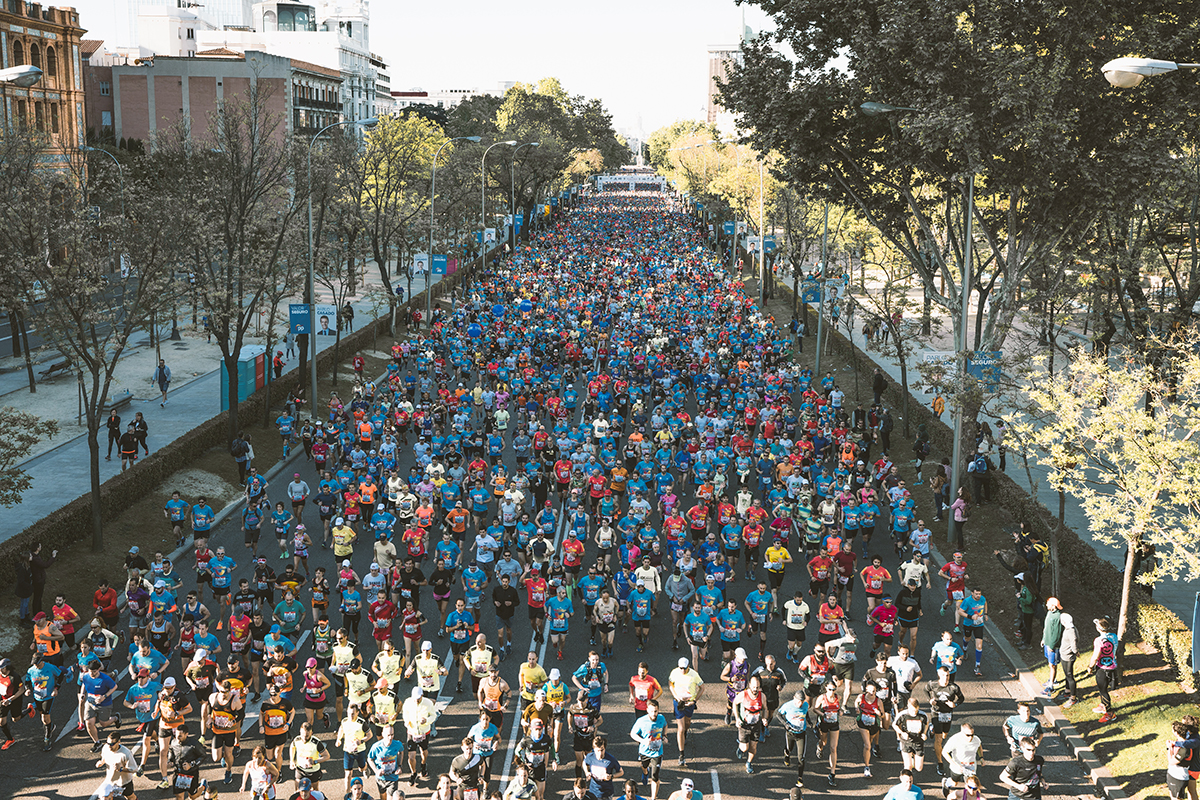
Aerial view of the pack flowing through central Madrid — with thousands of runners every year, places sell out and securing your bib early matters (photo: David Aguero / rocknrollmadridrun.com).
Madrid Rock'n'Roll registration typically opens in summer or early autumn of the year before the race, with a tiered pricing system that steps up as the race approaches and as each tier sells out (early-bird → standard → final places). For 2027 you'll want to check the official site every couple of weeks starting around September 2026: the marathon sells out before the half.
Reference status from the 2026 edition close-out:
Marathon: sold out.
Half marathon: last places available.
10K: last places available.
Assuming you'll find a Madrid bib in March is the mistake most runners make — those who wait usually end up on the Marketplace or shut out entirely.
What to budget for beyond the bib price:
Mandatory RFEA federation licence (not included): +3 € for the half marathon and 10K, +5 € for the marathon.
Refund policy: 90 % refundable with medical certificate submitted before 31 March 2026 (the equivalent 2027 cutoff will be in the published rulebook). Registrations are not transferable to another edition or another race.
Official Marketplace: if you get injured or can't run, there's an internal resale window for transferring your bib — open until mid-March.
Total event cancellation: your registration carries to the next edition; no money refunds.
For the 2027 edition confirm current prices and the opening date on the official registration page — that's where amounts and tier deadlines are updated.
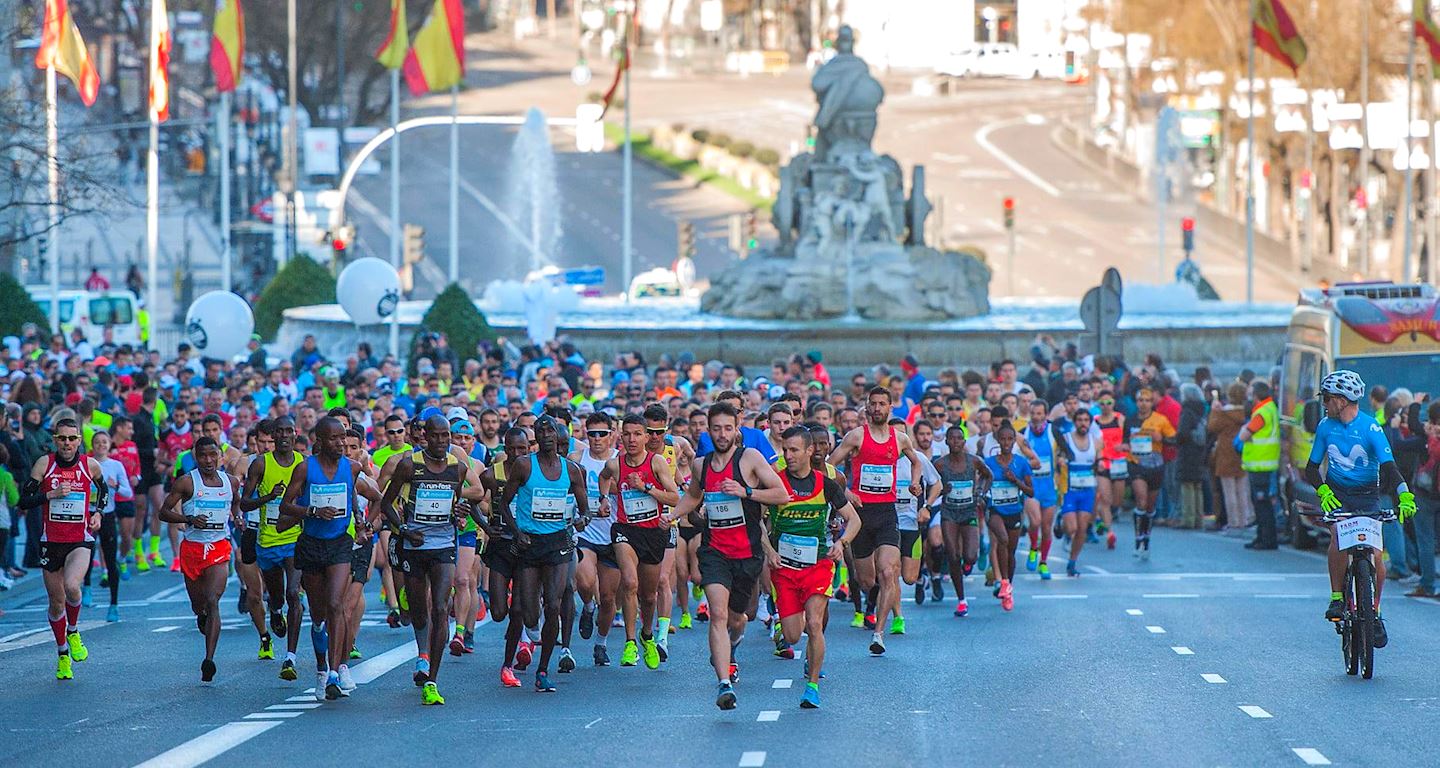
The lead pack heading out past the Cibeles fountain with the Movistar lead-bike ahead — the postcard that defines the Madrid race.
This is not a flat PR-hunting race. Madrid sits at roughly 650 m above sea level on rolling terrain, and the course rewards runners who pace honestly through several long, gentle drags rather than runners who set out hot. What you trade in flat-fast geometry, you gain in atmosphere: closed avenues lined with spectators, a festive atmosphere along the course, and a finish that drops you straight into the heart of the city.
The Rock’n’Roll brand began in San Diego in 1998 and now spans more than a dozen cities worldwide; the Madrid edition has become the largest spring-season half marathon in the Spanish capital.
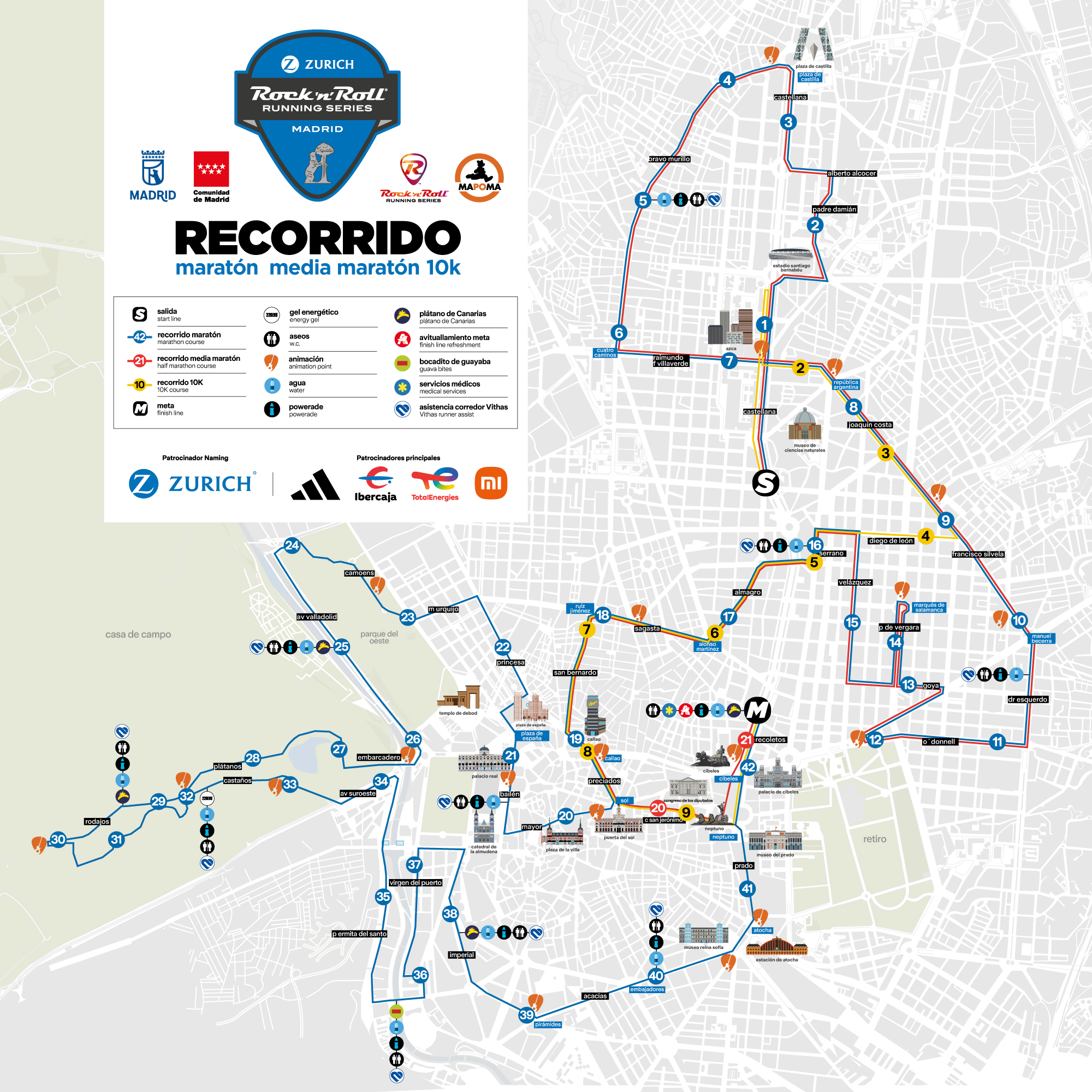
Official 3D course map published by the organiser (2026 edition). The half marathon route stays effectively the same year over year.
The half marathon is a single loop through central Madrid that touches most of the postcard landmarks. The exact route is published by the organiser each year and tends to vary slightly with city construction, but the broad shape has stayed consistent since the Rock’n’Roll Madrid format was established.
Recent editions have started near Paseo del Prado, opposite the Prado Museum. The first kilometres run north past Plaza de Cibeles and onto Gran Vía — usually closed end-to-end for the race — before turning west toward the Royal Palace. From there the course descends toward Madrid Río along the western edge of the city, picks up the river path, and climbs back up into the Salamanca district. The closing kilometres traverse the Retiro perimeter and finish on Paseo del Prado, a few hundred metres from where the race began.
The road surface is asphalt throughout, with several short sections of cobbled pavement near Plaza Mayor and around the Royal Palace. Tight 90-degree turns are limited; the course flows mostly on wide boulevards. Aid stations with water and isotonic drink sit roughly every five kilometres, with gels available at one mid-course station around km 11.
Spectator density is highest along Gran Vía, around Plaza de España, and at the finish on Paseo del Prado.
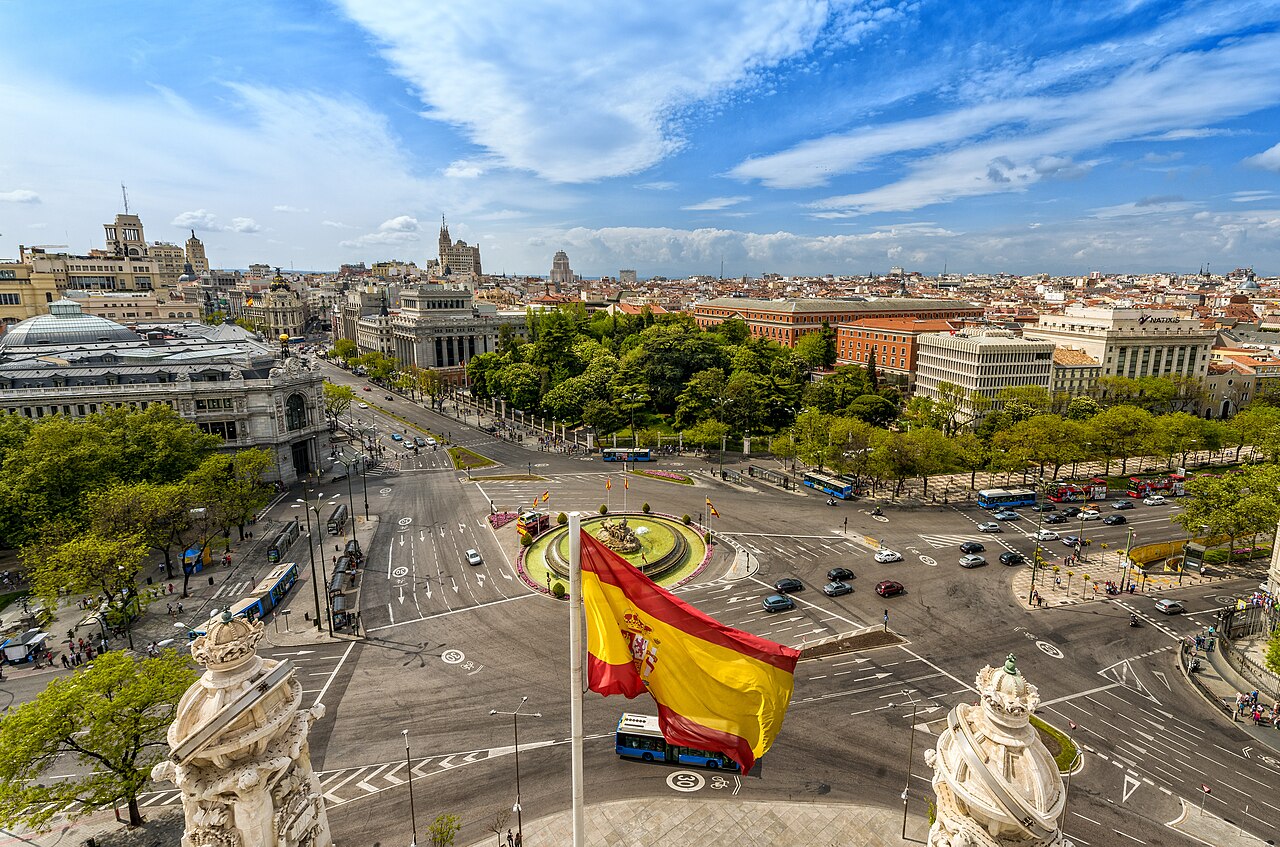
The Cibeles area marks one of the points where the cumulative central-Madrid elevation starts to bite (photo: Wikimedia Commons, CC).
Forget the "flat city centre" myth — Madrid runs uphill more than it looks. Total elevation gain is in the 150–200 m range depending on the exact route, which is moderate for a road half marathon but enough to slow you noticeably if you treat it as flat.
Two structural climbs define the course:
Km 7–9: leaving the river path back up into the city. Long, steady, and rarely pitched above 4 % gradient, but inserted at the point where you have committed to your half-marathon pace.
Km 16–18: climbing toward the Retiro area, where pace tends to wobble for runners who went out aggressively.
The descents — the early stretch toward Madrid Río and the closing kilometres back down toward Paseo del Prado — are gentle enough to roll on without trashing your quads, but steep enough to claw back several seconds per kilometre if your form holds.
Pacing: target your average half-marathon pace as a 21.1 km integral, not a kilometre-by-kilometre split. A runner of 1h35 fitness on a flat course typically finishes Madrid in the 1h36–1h38 range. Plan for a 5–8 second-per-kilometre cushion on the climbs and trust your legs to push it back on the descents.
Winner finishing the 2026 edition (photo: rocknrollmadridrun.com).
The Rock’n’Roll Madrid event traces its lineage to the consolidation of major Madrid road races under the Rock’n’Roll Running Series banner in the 2010s, after the format was licensed internationally by what is now the Ironman Group. Earlier editions ran as the EDP Rock’n’Roll Madrid Marathon and combined a full marathon with a half and a 10K. In recent seasons the half marathon and 10K have become the headline distances, while the full marathon runs separately under the EDP Madrid Marathon name.
Madrid’s road-racing tradition predates the Rock’n’Roll branding by decades — the city has hosted a major April marathon since the early 1980s. The Rock’n’Roll era brought the Concurso de Bandas, heavier race-weekend production and a more international participant mix; recent editions have drawn participants from more than 60 countries.
Race & honours summary (recent editions):
Fact
Value
First edition of the Madrid marathon
1978
Rock'n'Roll Running Series rebrand
mid-2010s
Current distances
Marathon · Half marathon · 10K
Participants (all distances, recent editions)
~30,000
Countries represented
60+
Course-record range, elite men (half)
60–62 min
Course-record range, elite women (half)
67–70 min
Year-by-year results are published by the organiser at rocknrollmadridrun.com and indexed by the AIMS database; this guide doesn't reproduce the full palmarés to avoid drift.
Friends and family making cheering signs at the 2026 Madrid Rock’n’Roll expo (photo: rocknrollmadridrun.com).
Bib collection happens at the Race Expo, normally held over the two days before the race (Friday and Saturday) at IFEMA Madrid or a comparable venue near Campo de las Naciones. Same-day bib pickup is not offered; you must collect in person before the expo closes on Saturday, which historically is around 21:00.
You will need:
Your registration confirmation (printed or on your phone)
A valid photo ID
Friends and family can collect on your behalf with a signed authorisation and a copy of your ID — the exact form is downloadable from the organiser’s website in the weeks leading up to the race.
The expo itself is worth budgeting at least an hour for. Major running brands set up booths with race-week discounts, and local clubs host short workshops and pacing-strategy sessions. A timing-chip check is normally available at the bib-pickup desk.
The race kit typically includes a finisher technical t-shirt, the bib with timing chip, a baggage tag, and a course map. Finisher medals are distributed in the post-race area after you cross the line.
Plaza Mayor — central reference point in Madrid, a few minutes from the metro stations recommended to reach the start (photo: rocknrollmadridrun.com).
Madrid has one of the densest metro networks in Europe and the easiest way to reach both the start line and the expo is by metro. The closest stations to a recent Paseo del Prado start area are Banco de España (line 2), Estación del Arte (line 1), and Sevilla (line 2) — all within a 5-minute walk of the start corrals.
On race-day morning the metro starts running at 06:00. Trains have been free for runners wearing their bib in some recent editions; check the race-week communications from the organiser to confirm. Plan to be in your corral 30–45 minutes before the gun: portable toilets queue heavily in the last 20 minutes.
For the expo, the closest metro stations to IFEMA are Feria de Madrid (line 8) and Mar de Cristal (lines 4 / 8). From central Madrid the trip is about 25 minutes door-to-door.
Driving and parking is not recommended. Most central streets are closed for the race from early morning until early afternoon, and central Madrid is inside a low-emission zone (ZBE) that restricts older non-resident vehicles. If you must drive, park near a metro stop on the outskirts and ride in.
Sol is a 15-minute walk to the start line and well-connected to IFEMA by metro (photo: Wikimedia Commons, CC).
For a runner, staying within a 15-minute walk of the start line is worth the small premium. The three best neighbourhoods to base yourself are Sol / Gran Vía, Atocha, and Salamanca.
District
Why it works
Hotel examples
Sol / Gran Vía
On top of restaurants, pharmacies and the metro hub. Lively Saturday night.
Iberostar Las Letras Gran Vía · The Principal Madrid · NH Collection Madrid Gran Vía · Riu Plaza España · Hotel Vincci Vía 66
Atocha / Paseo del Prado
Right by the start and Atocha station; quieter at night.
NH Atocha · Hotel Mediodía · Petit Palace Atocha · Vincci Soho · Only YOU Atocha
Salamanca
Residential, elegant, top-tier restaurants; 15-min walk or short metro ride.
Hotel Wellington · Único Madrid · Heritage Madrid · NH Collection Madrid Suecia · Hotel Orfila
Avoid:
Chamartín and the airport area unless you specifically want quiet — the metro adds 30 minutes each way and on Sunday any friction matters.
Unregistered short-term rentals — always ask the host for the VUT / tourist-registration number; municipal enforcement has tightened and bookings have been cancelled mid-race-week.
Book at least two months in advance. The race weekend overlaps with Spanish school holidays in some years and Madrid hotel inventory tightens fast. If you're flying or arriving by AVE, hotels along the Atocha–Sol axis combine arrival logistics with proximity to the start best.
2026 finishers with their medals on a sunny day — the typical late-April Madrid race-weekend pattern (photo: rocknrollmadridrun.com).
Late April in Madrid is one of the more pleasant running windows of the year, but it also carries the highest race-week variance. The 30-year average for the last week of April is a low of 9 °C and a high of 21 °C, with sunny conditions roughly 70 % of days.
Rain is possible but uncommon — historical precipitation for race day across recent editions sits in the 5–15 mm range only in roughly one year out of five. When it rains, it tends to be light morning showers that clear by mid-morning rather than a wash-out.
The variable to watch is heat. Madrid sits inland at altitude and can swing from 12 °C in the morning to 28 °C by midday in late April. A 9:00 start gives you a roughly two-hour window of cool conditions before the sun starts to bite. Carry your own water if you are slow and the forecast is above 22 °C — the on-course aid is adequate but not generous, and the back of the field reaches the late stations after several thousand runners have gone through.
Wind is generally light — under 15 km/h on most race days. Madrid is not a windy city.
Ten honest weeks of training lead to this moment (photo: rocknrollmadridrun.com).
Approach Madrid as a 21.1 km race with a 200 m elevation budget, not as a flat half. Pick your goal time and follow the table — these are peak-week volumes (weeks 7–8 of the block), not full-cycle averages.
Goal time
Avg pace
Peak weekly
Long run peak
2h30
7:06 min/km
30–40 km
16–18 km
2h00
5:41 min/km
45–55 km
18–20 km
1h45
4:58 min/km
55–70 km
20–22 km
1h30
4:16 min/km
70–90 km
22–24 km
≤1h15
3:33 min/km
90–110+ km
22–24 km
How to read the table and structure the week:
These are peak-week volumes (weeks 7–8). The 10-week average will be roughly 70 % of the row you pick.
One long run per week, no more. It's the single session that builds the most aerobic fitness for a half-marathon block.
The rest of the volume is easy conversational running — pace where you can speak full sentences without panting.
Typical distribution: 80 % easy / 20 % hard, measured in total time, not kilometres.
One quality session per week is enough up to a 1h45 goal; from there, two.
Two sessions that pay for themselves at any goal time:
Rolling-terrain tempo. 6–8 km at goal half-marathon pace on a loop with 80–120 m of elevation gain. You learn how to not blow up on the climbs.
Long intervals on a 1–2 % gradient. 4–6 × 1 km at half-marathon pace. Teaches you to spend the climb without redlining.
The taper is two weeks, not one. Week 9 at 70 % volume, week 10 at 50 % keeping race pace alive in short pickups. The last two long runs (weeks 7 and 8) are the ones that fill the cup; what you do in week 10 doesn't add fitness anymore — it just recovers the body.
Volunteer pouring isotonic at a Madrid Rock’n’Roll aid station (photo: rocknrollmadridrun.com).
What the organiser provides on course:
Liquid aid stations every ~5 km (km 5, 10, 15, 20). Water and the sponsor's isotonic drink.
A single gel station, typically around km 11 (confirm in the year's official runner guide).
Cold sponges at one station if the forecast is warm.
Solid food at the finish: fruit, bars, isotonic drink, water.
Carbohydrate plan by goal time:
Goal
Carbs / hour
Gels to carry
When to take
2h30
30–45 g
2 gels
km 8 and km 15 + isotonic at every aid
2h00
45–60 g
3 gels
km 6, km 12, km 17
1h45
60–75 g
4 gels
km 5, km 10, km 14, km 18 (2:1 maltodextrin:fructose blend)
≤1h30
75–90 g
4–5 gels + bottle
start earlier (km 4) and every 4–5 km
Three mistakes you'll see every year in Madrid:
Trying new gels on race day. Carbs are rehearsed on at least two long runs in advance; gut distress arrives at km 14, not at km 5.
Skipping the km-5 aid because "I'm not thirsty yet". Madrid can start at 12 °C and climb to 22 °C in two hours. Drinking early avoids the bonk window at km 15–18.
Relying on the on-course gel station. It's a single point at half-distance. Carry your own: 2 for sub-2h, 4 for sub-1h45.
Carbo-loading the race week is not stuffing yourself Saturday night — it's 7–10 g/kg/day of carbohydrates across the 3 days before, keeping plate sizes normal but raising the share of pasta, rice and potato. Saturday dinner should be light and familiar; gastronomic experiments in Atocha are not your friend.
Shoe choice is one of the few honest shortcuts in a half marathon (photo: rocknrollmadridrun.com).
Madrid's well-maintained asphalt lets you run comfortably with either a carbon-plate shoe or a fast daily trainer. The few cobble sections (around Plaza Mayor and the Royal Palace) are short — a stiff plate handles them fine.
Recommendations by goal time:
Goal
Category
Common models
≤1h20
Carbon-plate "race"
Nike Vaporfly 4 / Alphafly 3 · adidas Adios Pro Evo · ASICS Metaspeed Sky / Edge · Saucony Endorphin Elite · NB SC Elite v4
The 5 shoes you'll actually see at the Madrid start line:
1. Nike Vaporfly Next. The reference for the carbon-plate "race" category. Current models (Vaporfly 4, Alphafly 3) inherit the same idea (photo: Wikimedia Commons, CC).
2. Adidas Adizero Adios Pro 3. Adidas's answer to the Vaporfly: Lightstrike Pro foam and Energyrods carbon plate. The Pro 4 and Adios Pro Evo 2 are the 2026–2027 race models (photo: Wikimedia Commons, CC).
3. ASICS Metaspeed Edge Paris mid-race. "Edge" geometry built for longer-stride / high-cadence runners; the "Sky" is the twin for shorter-stride / lower-cadence. FF Turbo foam + rigid carbon plate (photo: Wikimedia Commons, CC).
4. Adidas Adizero Boston 12. The most popular fast daily trainer in the sub-2h pack: Lightstrike Pro + fibreglass rods (not carbon). The newer generation (Boston 13/14) keeps the geometry (photo: Wikimedia Commons, CC).
5. Vaporfly cutaway. What you're paying for in a "race" shoe is in here: full carbon plate sandwiched in ZoomX foam with Zoom Air pods. That's what produces the documented ~4 % energy-saving (photo: Wikimedia Commons, CC).
Check this before you leave home:
Mileage on your shoe. A carbon-plate race shoe loses energy return after 250–350 km. If you used it for your last fall half and have done long runs in it, it arrives at Madrid spent.
Drop and footstrike. Madrid is not flat: if you usually run at 10 mm+ drop and switch to 4 mm "to gain 30 seconds", soleus and Achilles will charge you back from km 12 onward.
Sock + glide. More Madrid finishers leave with a blister on the big toe than with cramps. Tested technical socks + Vaseline or BodyGlide on rub points.
Tested in at least two long runs. Wearing brand-new race shoes on race day is the lesson everyone learns once.
Around 150–200 m of elevation gain over 21.1 km. That is enough to be slower than Valencia or Berlin but not enough to make it a "hilly" race in international terms. Treat it as 21 km of rolling road, not flat tarmac.
Recent editions cap the half marathon at 3 hours from the back of the last starting wave, which corresponds to about a 14 minute/km cutoff. Walking is allowed; the course does not formally close until after the final cutoff.
A bag-drop area is set up in the start zone. Tag your bag with the printed sticker provided in your race kit, drop it 15–30 minutes before the start, and collect it from the same area after you finish. The drop-off is staffed but not ID-checked, so do not leave valuables.
Yes. The course atmosphere — closed avenues, crowds and on-course entertainment — is part of the experience, so many regulars choose to run without headphones, but it is not required.
Madrid is at 650 m. That is high enough to be measurable for runners coming from sea level — expect roughly 1–2 % of your VO2max blunted on race day if you arrive within 48 hours. Not a critical issue at recreational pace; more significant for elite runners chasing a hard pace target.
Metro is the recommended way. Banco de España, Estación del Arte, and Sevilla stations are all a 5-minute walk from a recent Paseo del Prado start area. Trains run from 06:00.
Found this useful? If you’re planning to run Madrid 2027, save the event on SportPlan to get registration-deadline alerts, expo reminders and — afterwards — to log your result.
계획 계속하기
SportPlan을 사용하여 날짜 비교, 목표 이벤트 저장, 주말에 맞는 시즌 구축 — 구조 없는 목록 대신.
 Aerial view of the pack flowing through central Madrid — with thousands of runners every year, places sell out and securing your bib early matters (photo: David Aguero / rocknrollmadridrun.com).
 The lead pack heading out past the Cibeles fountain with the Movistar lead-bike ahead — the postcard that defines the Madrid race.
 Official 3D course map published by the organiser (2026 edition). The half marathon route stays effectively the same year over year.
 The Cibeles area marks one of the points where the cumulative central-Madrid elevation starts to bite (photo: Wikimedia Commons, CC).
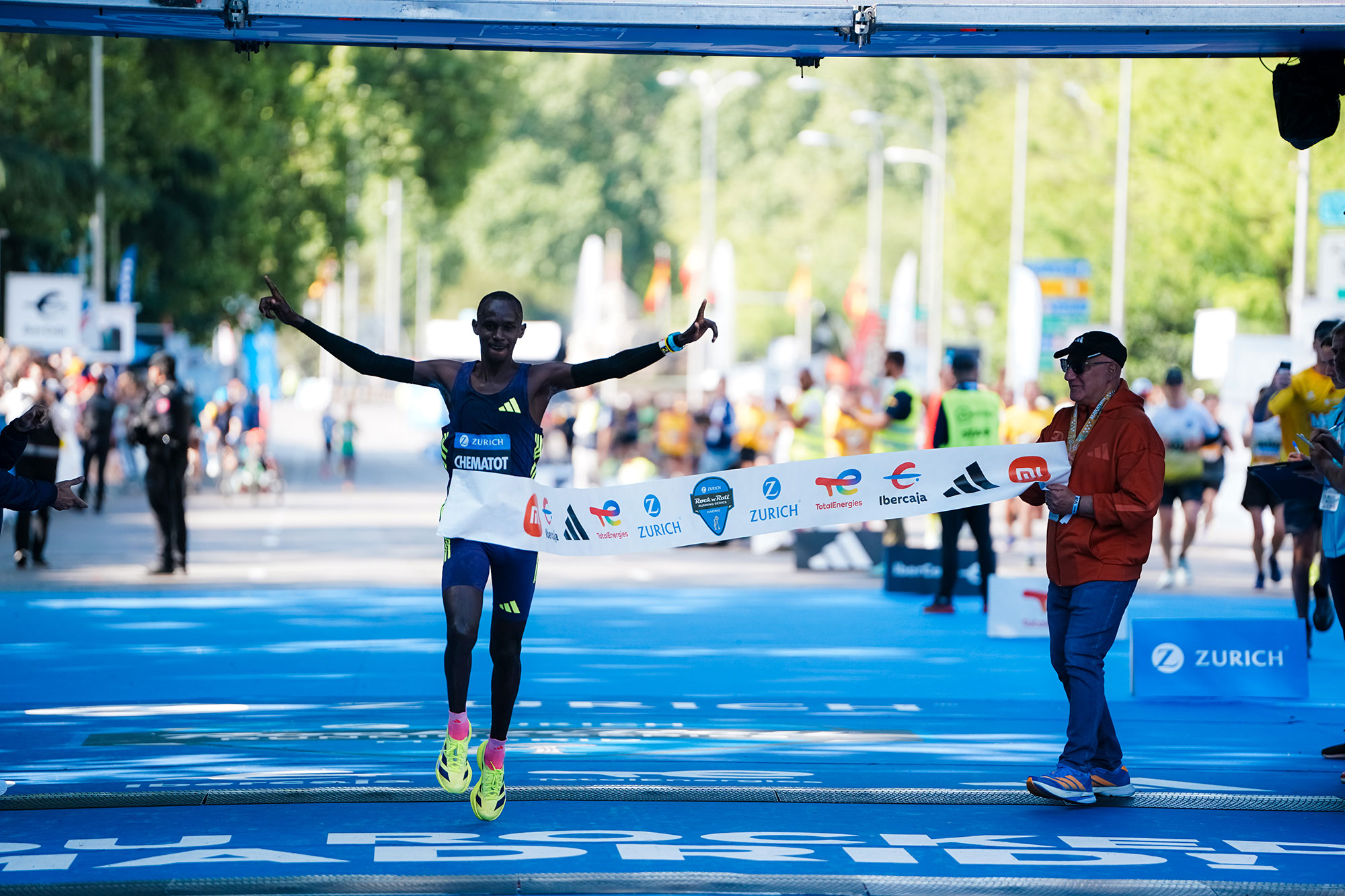 Winner finishing the 2026 edition (photo: rocknrollmadridrun.com).
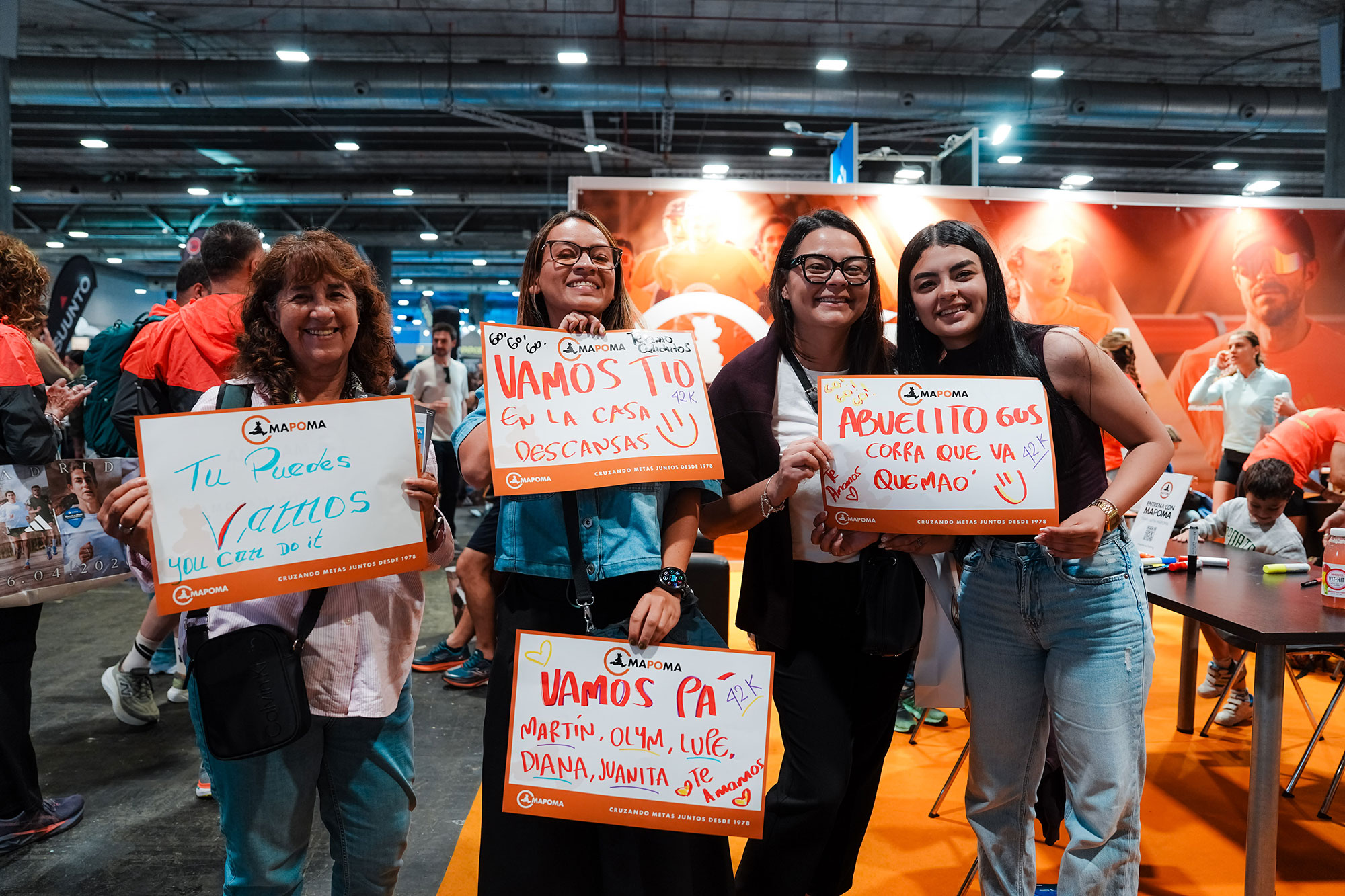 Friends and family making cheering signs at the 2026 Madrid Rock’n’Roll expo (photo: rocknrollmadridrun.com).
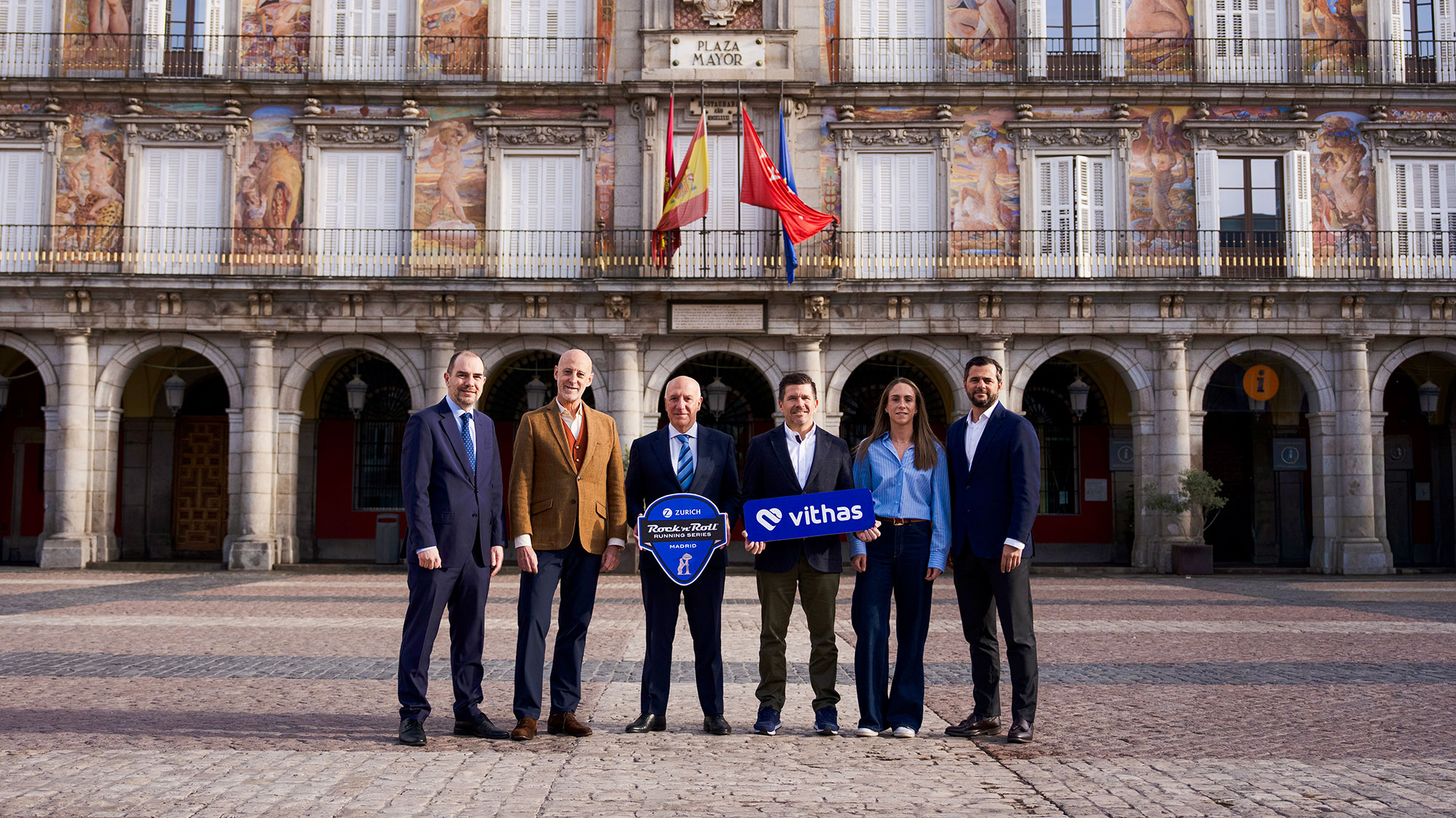 Plaza Mayor — central reference point in Madrid, a few minutes from the metro stations recommended to reach the start (photo: rocknrollmadridrun.com).
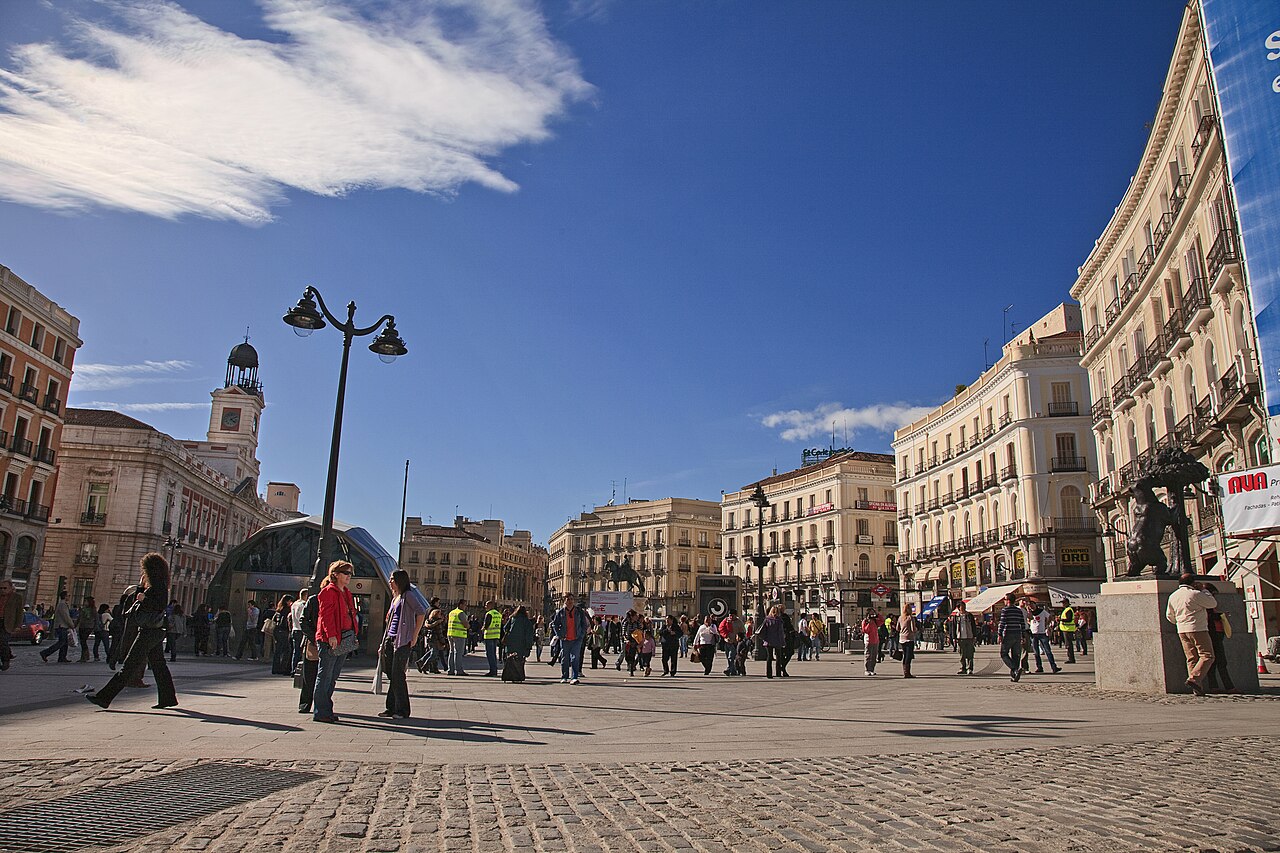 Sol is a 15-minute walk to the start line and well-connected to IFEMA by metro (photo: Wikimedia Commons, CC).
 2026 finishers with their medals on a sunny day — the typical late-April Madrid race-weekend pattern (photo: rocknrollmadridrun.com).
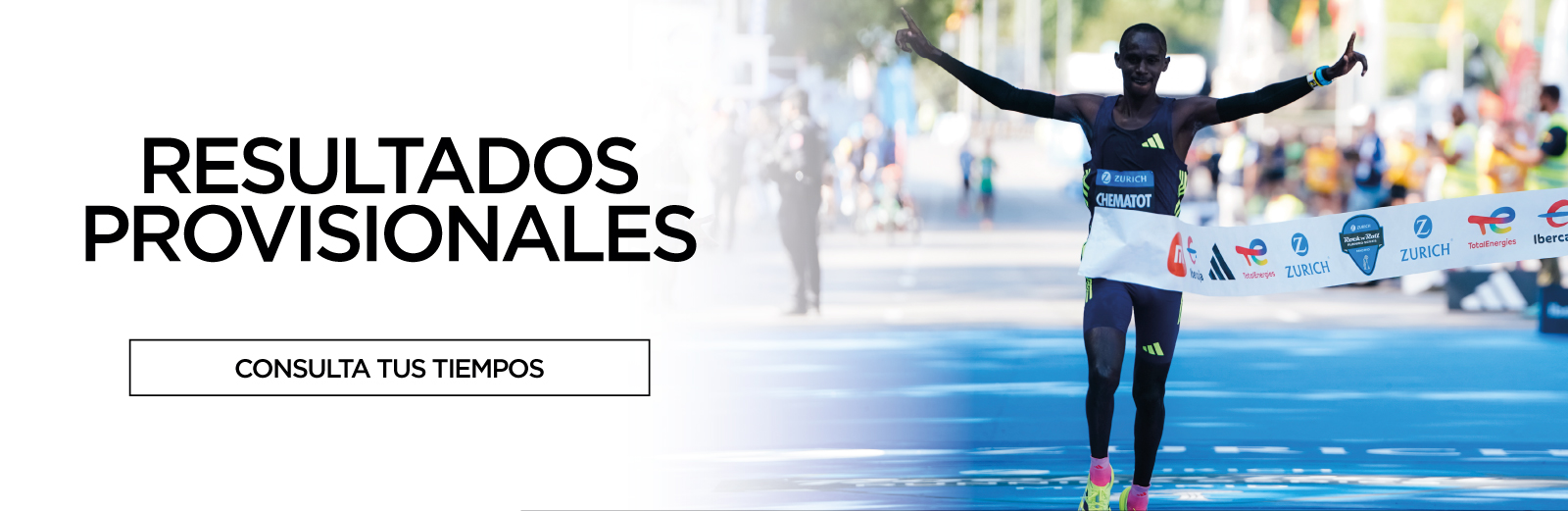 Ten honest weeks of training lead to this moment (photo: rocknrollmadridrun.com).
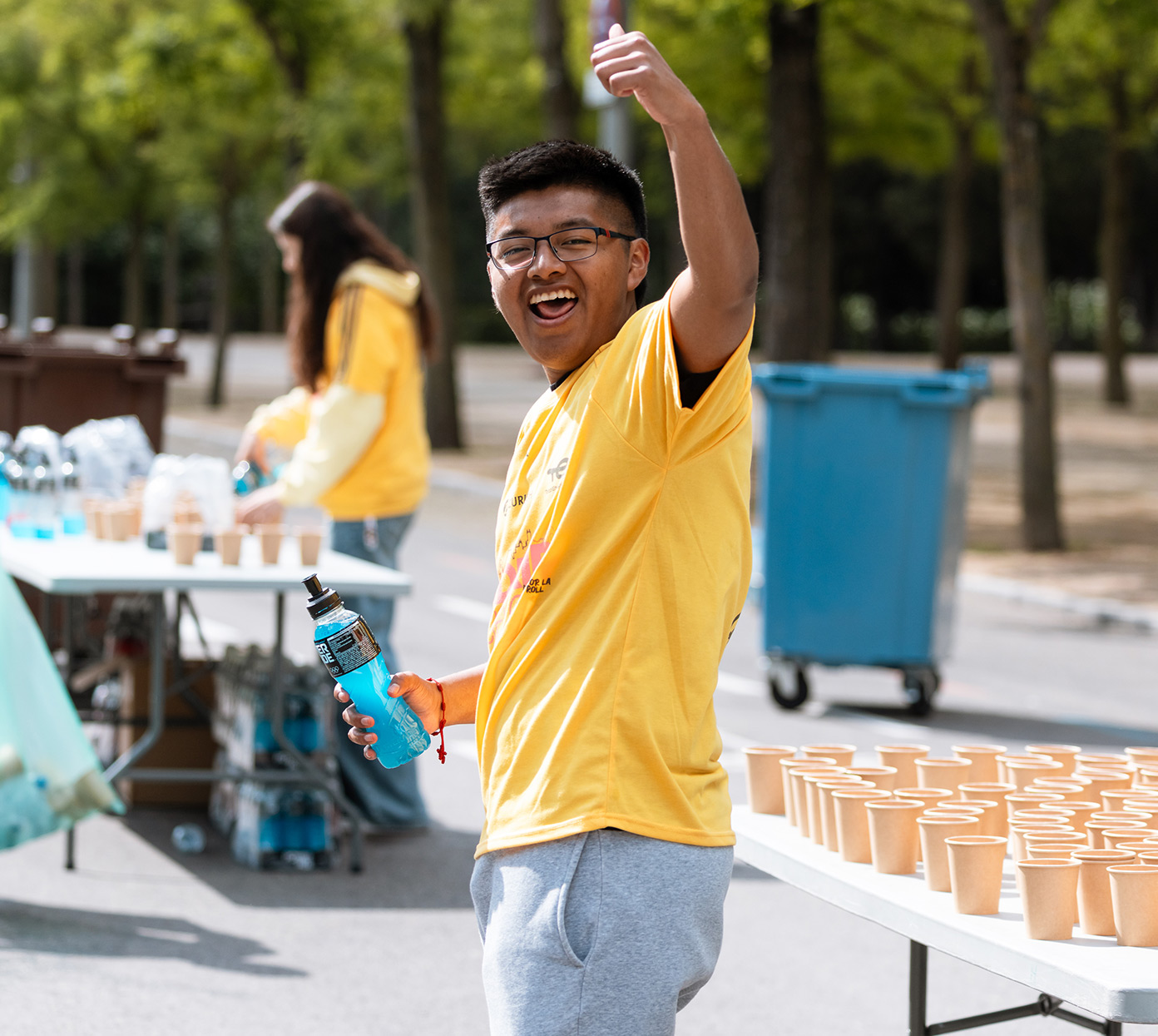 Volunteer pouring isotonic at a Madrid Rock’n’Roll aid station (photo: rocknrollmadridrun.com).
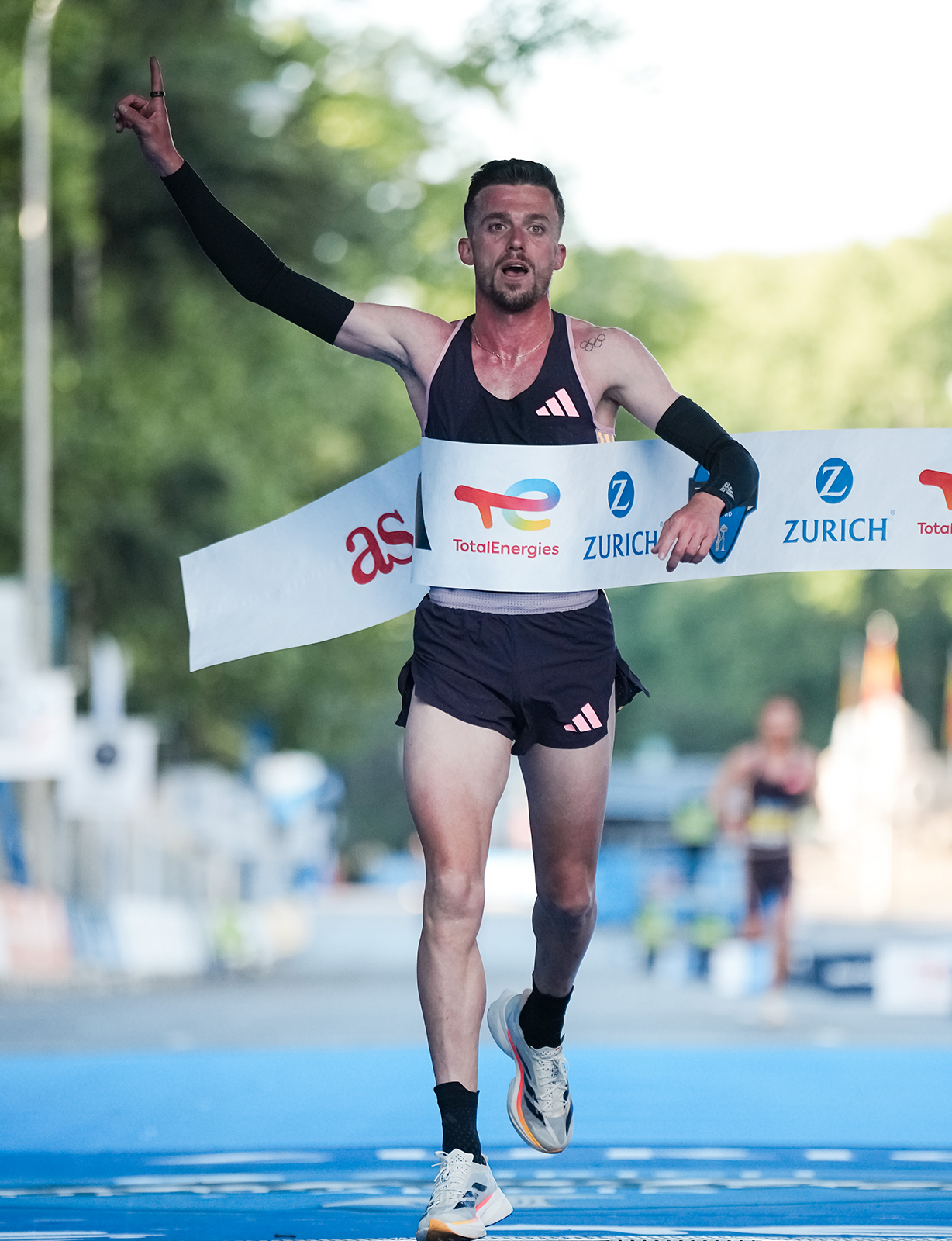 Shoe choice is one of the few honest shortcuts in a half marathon (photo: rocknrollmadridrun.com).
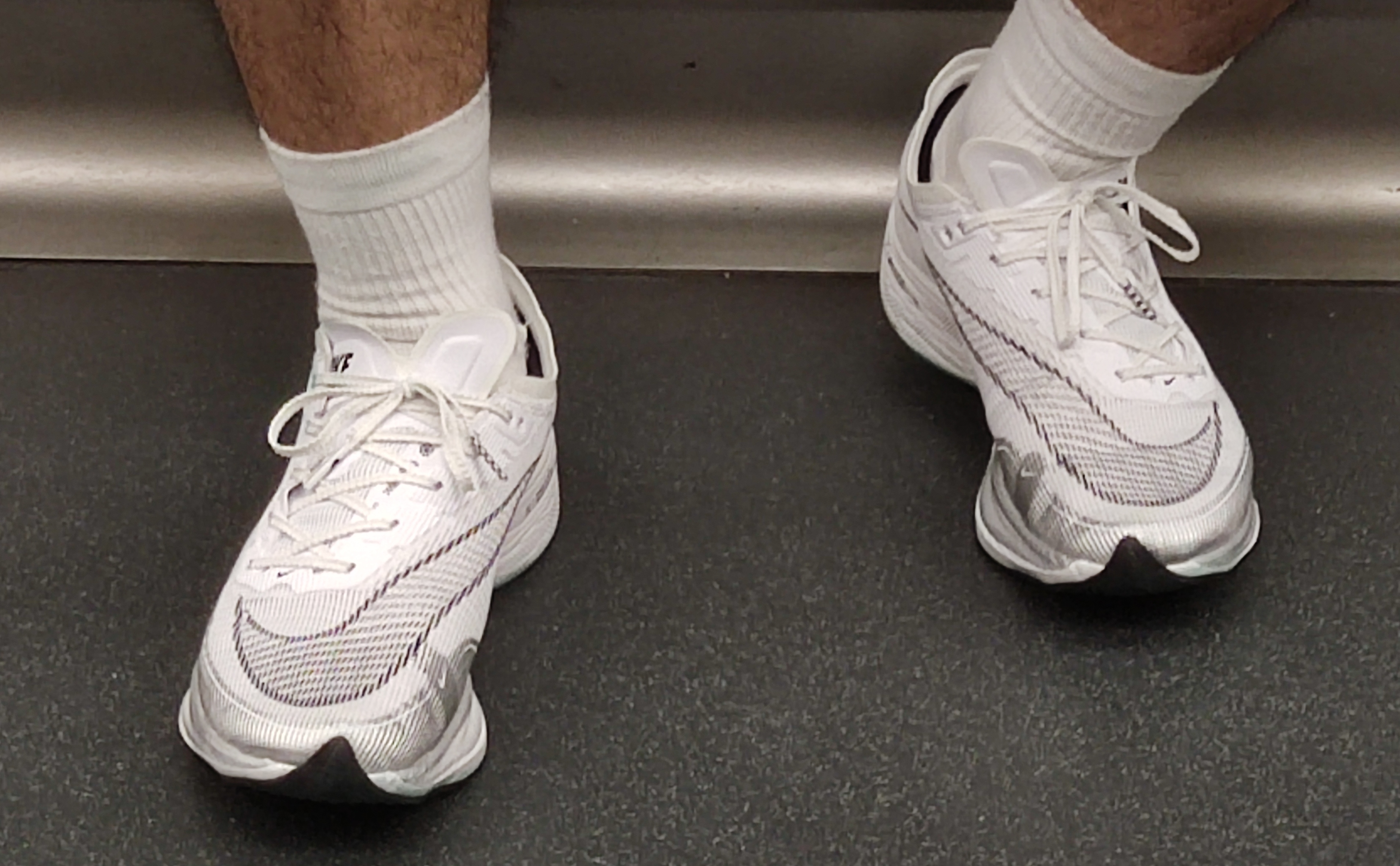 1. Nike Vaporfly Next. The reference for the carbon-plate "race" category. Current models (Vaporfly 4, Alphafly 3) inherit the same idea (photo: Wikimedia Commons, CC).
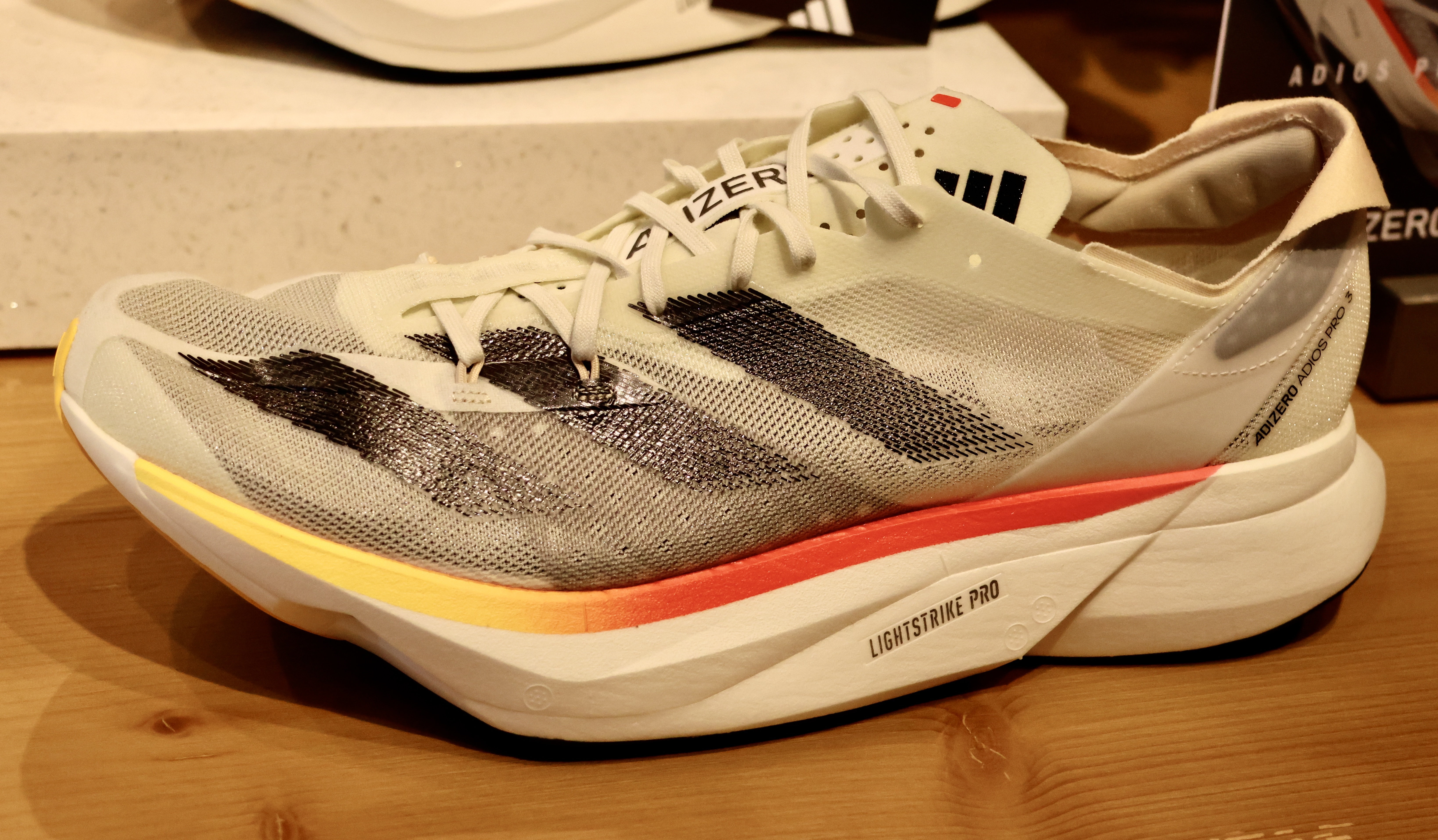 2. Adidas Adizero Adios Pro 3. Adidas's answer to the Vaporfly: Lightstrike Pro foam and Energyrods carbon plate. The Pro 4 and Adios Pro Evo 2 are the 2026–2027 race models (photo: Wikimedia Commons, CC).
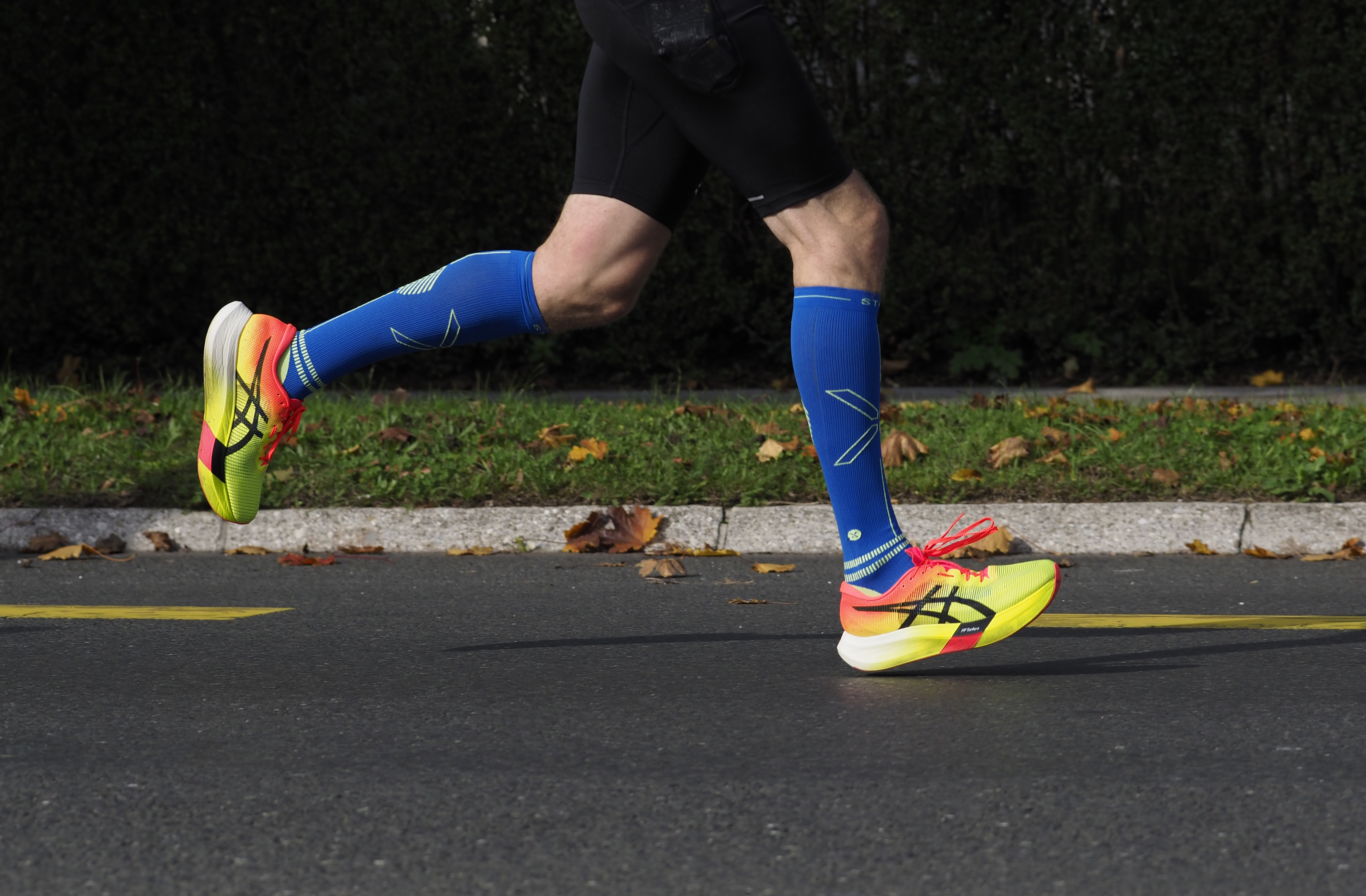 3. ASICS Metaspeed Edge Paris mid-race. "Edge" geometry built for longer-stride / high-cadence runners; the "Sky" is the twin for shorter-stride / lower-cadence. FF Turbo foam + rigid carbon plate (photo: Wikimedia Commons, CC).
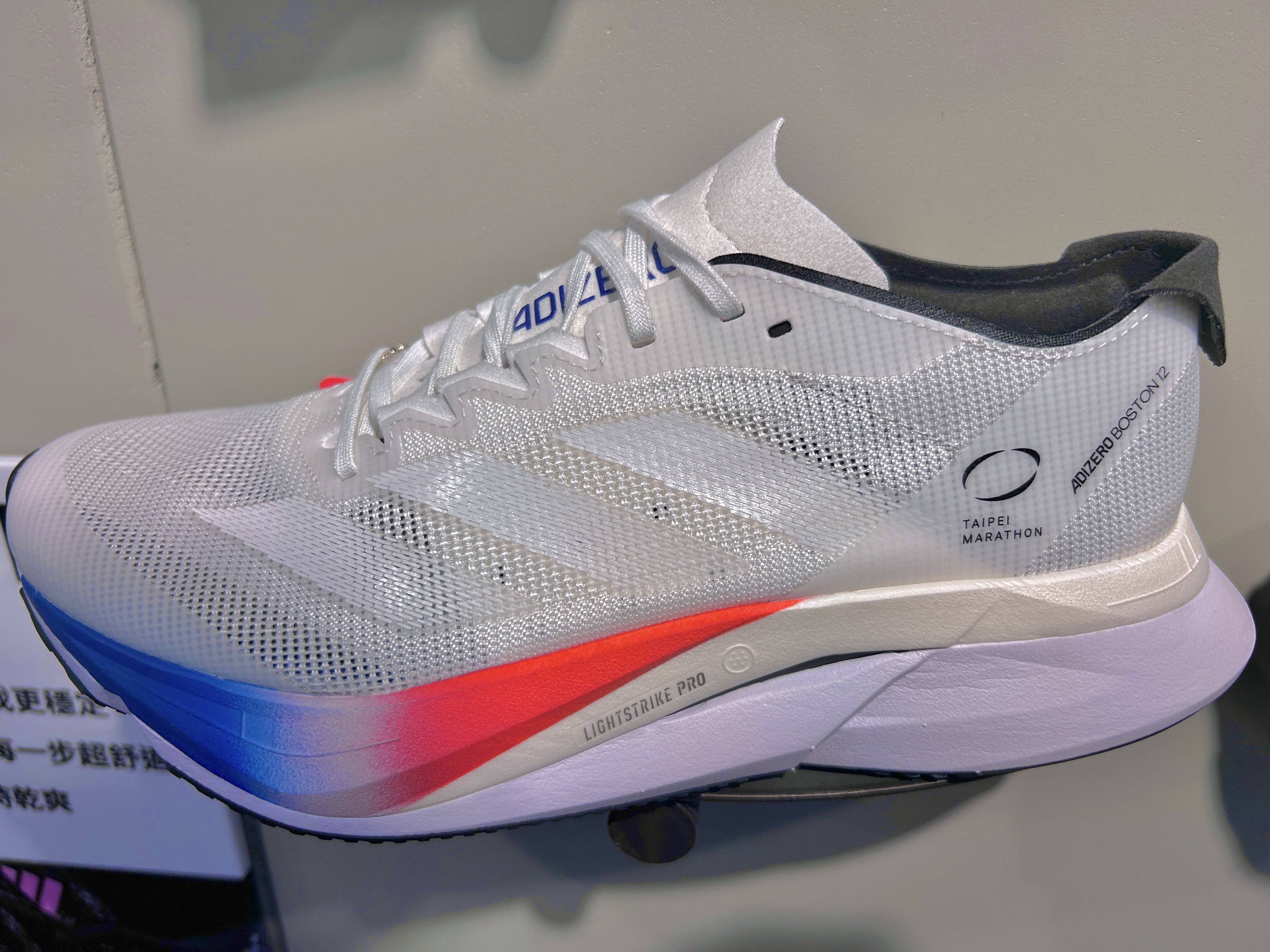 4. Adidas Adizero Boston 12. The most popular fast daily trainer in the sub-2h pack: Lightstrike Pro + fibreglass rods (not carbon). The newer generation (Boston 13/14) keeps the geometry (photo: Wikimedia Commons, CC).
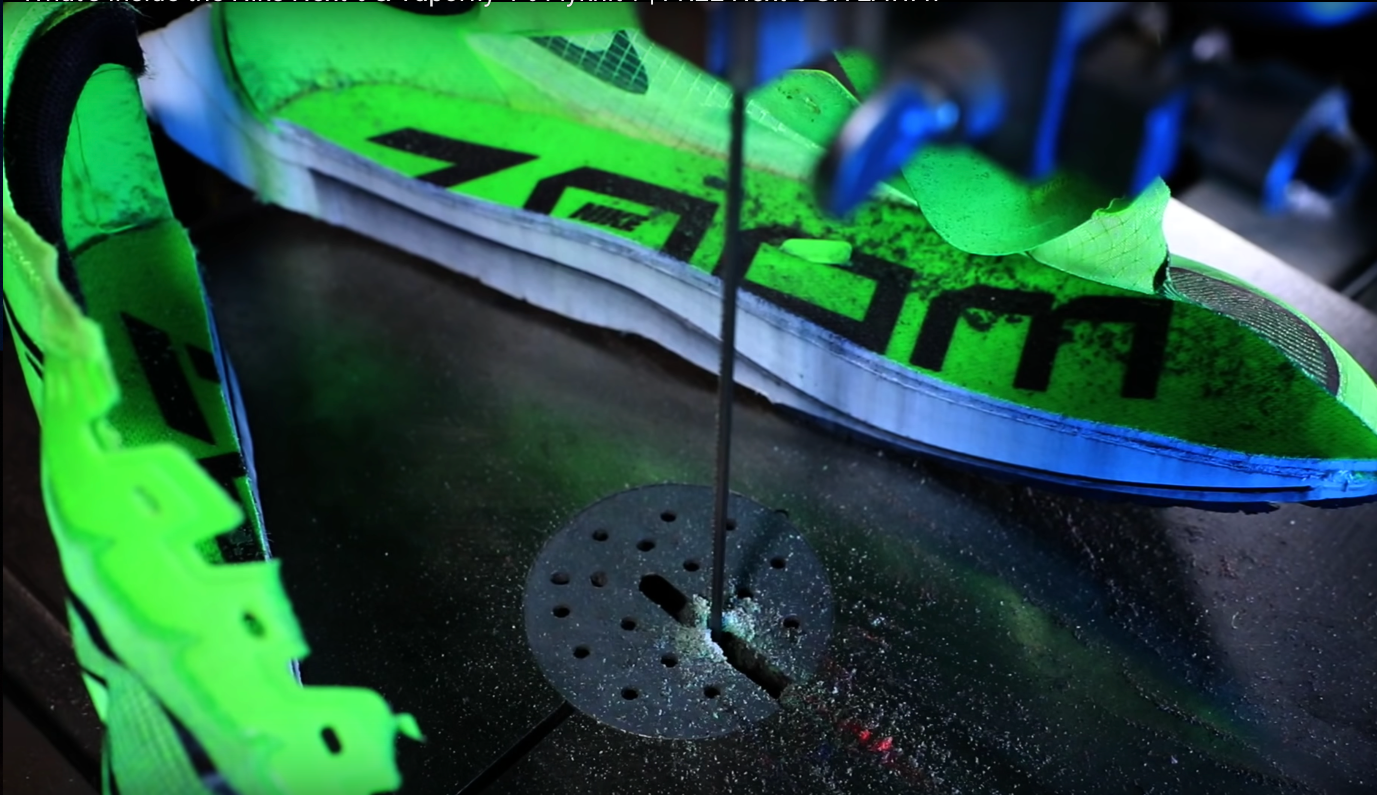 5. Vaporfly cutaway. What you're paying for in a "race" shoe is in here: full carbon plate sandwiched in ZoomX foam with Zoom Air pods. That's what produces the documented ~4 % energy-saving (photo: Wikimedia Commons, CC).