

Backyard Ultra: The Complete Guide to Your First Race
Understand the backyard ultra format, choose a sensible first event, prepare for repeated loops, and make calm decisions as the hours accumulate.
At most races, you can picture the finish. At a backyard ultra, you keep coming back to the same small camp. A chair, a bottle, a familiar face—and another bell.
A Backyard Ultra is a timed loop format: in the standard open version, runners complete a 6.7056 km yard and return to the corral for a new start every hour.
The challenge is deceptively simple: can you leave again, on time, with a plan that still makes sense? As daylight fades, the smallest decisions begin to matter.
Your strongest piece of kit is a routine you can repeat. This guide will help you build it: a manageable lap, an organised camp, practised food and drink, and a clear decision about the next start.
This chapter is for a regular runner considering a first backyard. Start with your current training and experience, then adapt the preparation to your event. The aim is a well-prepared first attempt, with room to learn and permission to stop.
Looking for your first start line? Browse the Backyard Ultra race calendar, then use this guide to compare the format, course and camp arrangements.
The standard rules are simple but strict:
- One yard is 6.7056 km (4 miles 880 feet).
- Start every hour, inside the corral at the bell; no late starts.
- Finish each yard in less than 60 minutes.
- No personal assistance or non-competing pacers on the course; trekking poles are prohibited.
- The winner must complete a yard beyond everybody else. If nobody does, there is no winner; other runners are recorded as DNF.
An open-ended backyard has no preset finish. Capped Backyard 6/12/24 variants have a defined duration and finish/DNF outcomes, without a winner. Check which format you are entering.
The word “yard” can make 6.7056 km sound tidy. It is not a 6.7 km race repeated with a fixed finish. It is a one-hour appointment repeated until the field cannot keep it. A runner who finishes in 59:55 and a runner who finishes in 45:00 have both completed one yard; they simply have different recovery problems waiting in the camp.
Translation: plan a repeatable hour, not a heroic distance. Your first useful target might be one yard, six yards (about 40.2 km), or simply a safe day in which you leave with your health intact. Those are planning targets, not predictions.
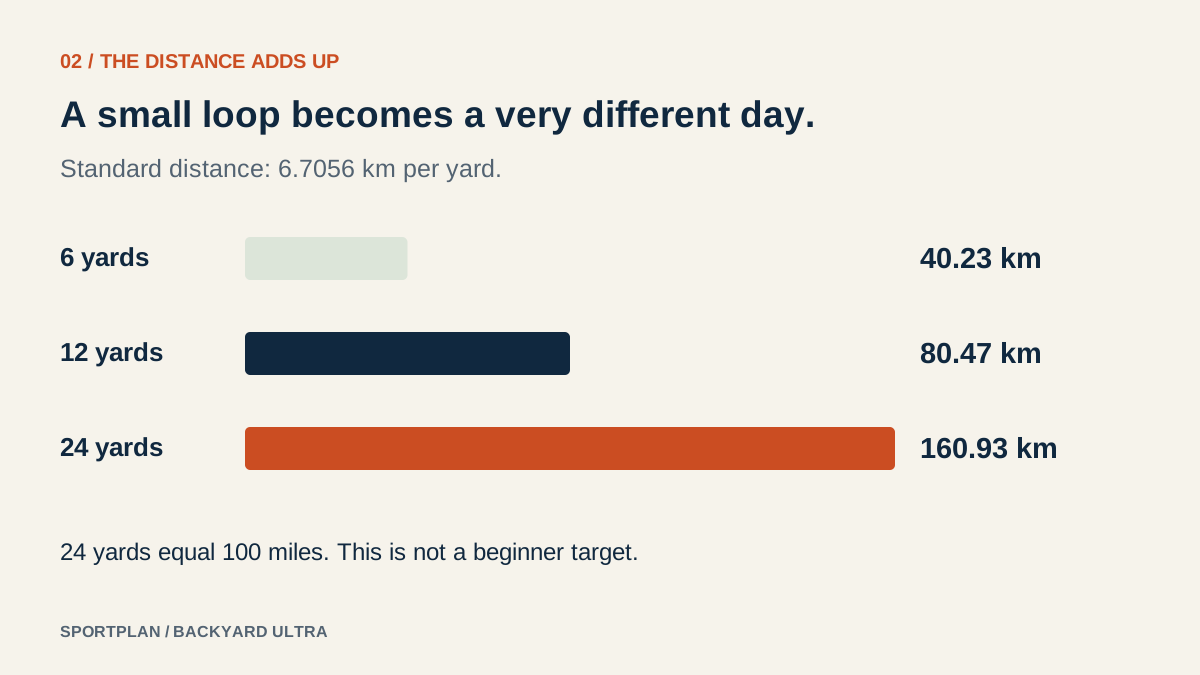
The loop stays the same; the day does not. These are distance calculations, not beginner targets.
Two events with the same yard length can demand very different preparation. Open the organiser’s current information before paying, and ask about anything that could change your plan.
| Check before entering | Why it changes your day |
|---|---|
| Surface, climbing and weather exposure | A paved circuit and a muddy wooded loop need different footwear and rehearsals. |
| Open-ended or capped format | A defined finish and a last-runner event are different commitments. |
| Camp space and shelter | Confirm what you may bring, where it fits and how far it is from the corral. |
| Toilets, drinking water and food | Find out what is provided and what you must supply yourself. |
| Crew access and required equipment | Check visitor rules, parking, lights, reflective clothing and course assistance restrictions. |
| Medical support and withdrawal procedure | Know where to ask for help and how to officially stop. |
| Travel after the event | Plan for an early withdrawal as well as a much later departure. |
You can begin with SportPlan’s Backyard Ultra category, then verify the specific race with its organiser. A convenient camp and clear instructions may matter more to your first experience than a famous name.
If the category has no suitable listings, broaden your search in the ultrarunning calendar. Check the format carefully: an ultra listing is not necessarily a backyard.
Your next start line: explore upcoming races in the SportPlan calendar.
Loading upcoming races…
Check dates, entry availability and rules with the organiser before making plans.
Backyard races tempt you to borrow somebody else’s goal. A friend may want a hundred miles, while your own sensible first objective is to learn whether your feet tolerate six hours of loops. Write down three goals before race morning:
- A process goal: for example, leave camp calmly, eat on schedule, and make every start with your kit organised.
- A floor: the smallest outcome that would make the entry worthwhile, such as three controlled yards or completing the daylight section without a foot problem.
- A stretch goal: a distance you could pursue if the floor is secure and your body remains cooperative.
This prevents a changing race from changing your identity. If your stretch goal becomes unsafe, you can still complete the process you came to practise.
Imagine Maya, a fictional runner with several road half marathons behind her but no overnight running experience. She considers six yards: 6 × 6.7056 = 40.2336 km.
Her half-marathon experience does not prove she is ready for that workload. She first compares the distance, terrain and repeated starts with what she has trained and recovered from. If the gap is too large, she revises the target or the event date.
A written goal gives her direction; it does not overrule how she feels on the day.
If you have little recent running, a persistent injury, fainting history, a condition affected by exertion, or a medication question, resolve that with a qualified clinician before entering. A backyard format has no natural stopping point that tells you when enough is enough.
There is no honest universal mileage, number of weeks, or “backyard workout” that guarantees readiness. Instead, give your training block a small set of jobs and adjust their size to your current base, recovery, terrain and event date.
Easy aerobic running teaches you to move economically and finish with capacity left. Keep most ordinary runs genuinely ordinary. The backyard rewards the pace you can repeat tomorrow, not the fastest pace you can display once.
Time on feet teaches the patience of a long day. A long run can include walking, hills and planned stops. Its purpose is to let you practise staying fed, calm and comfortable as the hours accumulate.
Repeatability means practising the return and restart as well as the running. Add a modest hourly-start rehearsal within a workload you already tolerate. You do not need to reproduce an exhausting race in training to learn where the bottle should go.
Strength and tissue tolerance support the surfaces and postures you actually use: calves and feet, hips, trunk, and the carrying or reaching your camp requires. Start conservatively and leave room for running quality.
Recovery is a training purpose. If an experiment leaves you limping, ill, or unable to sleep, the information is that the experiment was too large or poorly timed. Do not convert a warning into a badge of commitment.
| Phase | Practical work | Question before progressing |
|---|---|---|
| Establish a repeatable routine | Regular easy running, appropriate strength work and recovery. | Can I sustain this without accumulating problems? |
| Rehearse the event | Suitable terrain, run/walk choices, hourly resets, clothing and food. | Is the complete routine working, including the restart? |
| Arrive ready | Follow the easier final period in your plan, organise supplies and protect sleep. | What uncertainty can I remove without adding fatigue? |
The length and workload of each phase depend on your starting point. If you are unsure how to build them, work with a qualified coach. A calendar with more sessions is not automatically better preparation.
The most useful backyard rehearsal tests a small part of the plan. Mark out a route close to the event distance, set an hourly alarm, and practise returning to a deliberate camp routine.
You can use a shorter loop for early experiments, but do not pretend its turns, surface and aid logistics are identical to 6.7056 km.
Here is the arithmetic for three hypothetical moving-time choices. The moving time includes any walking you plan to do while you are out on the course; it is not an instruction to stop and rest for the whole remainder.
| Moving time | Time in camp | Average moving speed for 6.7056 km | Approximate moving pace |
|---|---|---|---|
| 45 minutes | 15 minutes | 8.94 km/h | 6:43 per km |
| 50 minutes | 10 minutes | 8.05 km/h | 7:27 per km |
| 55 minutes | 5 minutes | 7.32 km/h | 8:12 per km |
The numbers are planning examples. A runner may move faster on a downhill and walk a climb, then still average one of these figures. The useful question is whether the pace leaves enough time to use the toilet, change a layer, eat, drink, inspect a hotspot and stand in the corral before the bell.
A 45-minute yard requires faster running than a 55-minute yard. It buys more camp time, but may cost more effort than you can keep repeating. More rest on paper does not automatically make it the easier strategy.
A 55-minute yard reduces the required moving speed but leaves little margin for a toilet queue or shoe problem. Rehearse both the movement and the turnaround; choose from what you can repeat, not from somebody else’s favourite lap time.
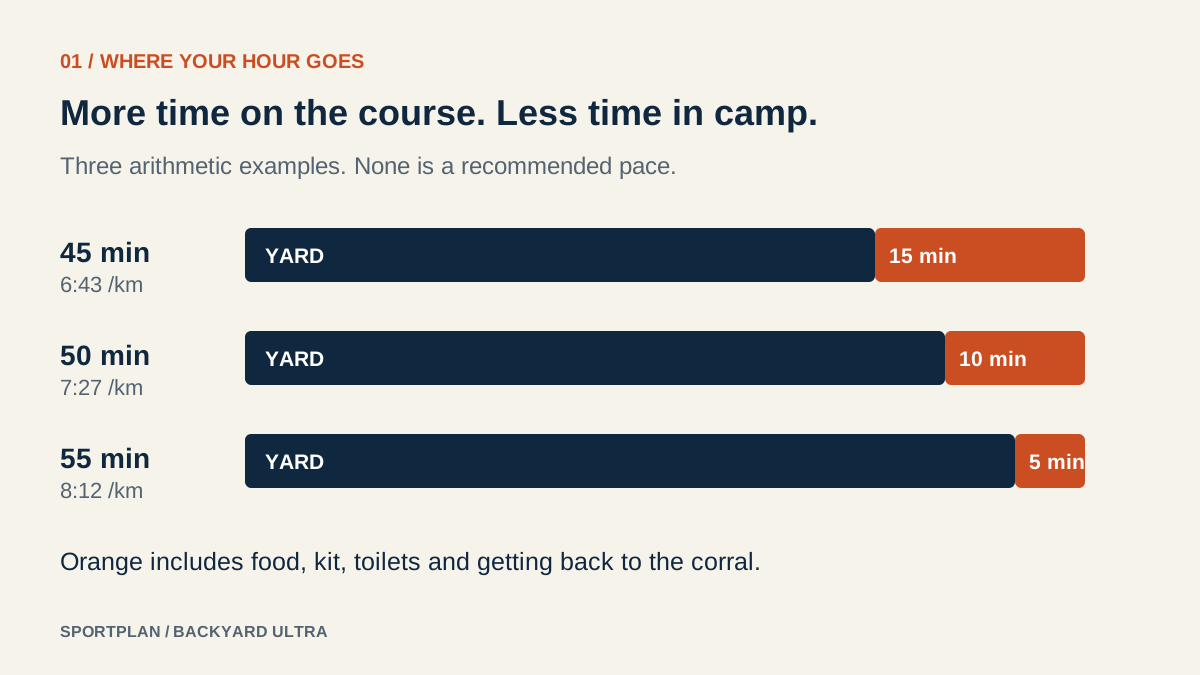
The orange minutes are your whole turnaround budget. Eating, changing kit and reaching the corral all spend it.
Try your own numbers in the running pace calculator: enter 6.7056 km and your proposed lap time. It calculates the average moving pace; subtract the lap time from 60 minutes separately to see your full turnaround budget.
Time your actual camp routine. Include the small journeys: from the finish to your chair, from the chair to the toilet, and from your kit back to the corral.
For a hypothetical 50-minute yard, a runner has ten minutes until the next bell. If basic jobs take seven and getting ready at the corral takes two, only one minute remains for surprises. An eight-minute queue will not fit because you planned to “rest for ten minutes”.
Also rehearse a bad return. What will you do if a lace breaks, a bottle leaks, or a hotspot appears at minute 38? Put the repair kit where you can reach it without emptying a bag. The aim is not to eliminate all problems; it is to stop a small problem becoming an unexamined next start.
Keep frequently used supplies within easy reach and give each item a consistent home. An unfamiliar bag becomes much harder to search when you are tired.
| Zone | Keep ready |
|---|---|
| Every-yard supplies | Familiar food, drinks, cup or bottle, and a place for used wrappers. |
| Weather changes | Dry layers, rain protection, hat and the clothing you expect to change into. |
| Feet and repairs | Tested socks and dressings, spare laces and the supplies you know how to use. |
| Night kit | Charged headlamp, tested backup and accessible batteries. |
| Race information | Corral location, organiser instructions, emergency contact and transport plan. |
Use a simple log if helpful: yard number, finish time, what you ate/drank, any problem and the next action. The goal is fewer repeated questions, not a complicated spreadsheet.
A crew can watch the clock, prepare supplies and help you notice changes. One person can do several jobs; you do not need a large team.
Ask for a short exchange: “What changed? What do you need? Are we starting again?” Discuss concerns honestly. Crew should support the runner’s choice to stop and follow medical instructions, not pressure them into another lap.
Pack a self-service version in case your crew is delayed. Learn to refill, find your clothes and prepare your light yourself.
Confirm exactly where support is permitted. Do not arrange hand-ups or a friend accompanying you on course; the standard format restricts personal assistance and non-competing company there.
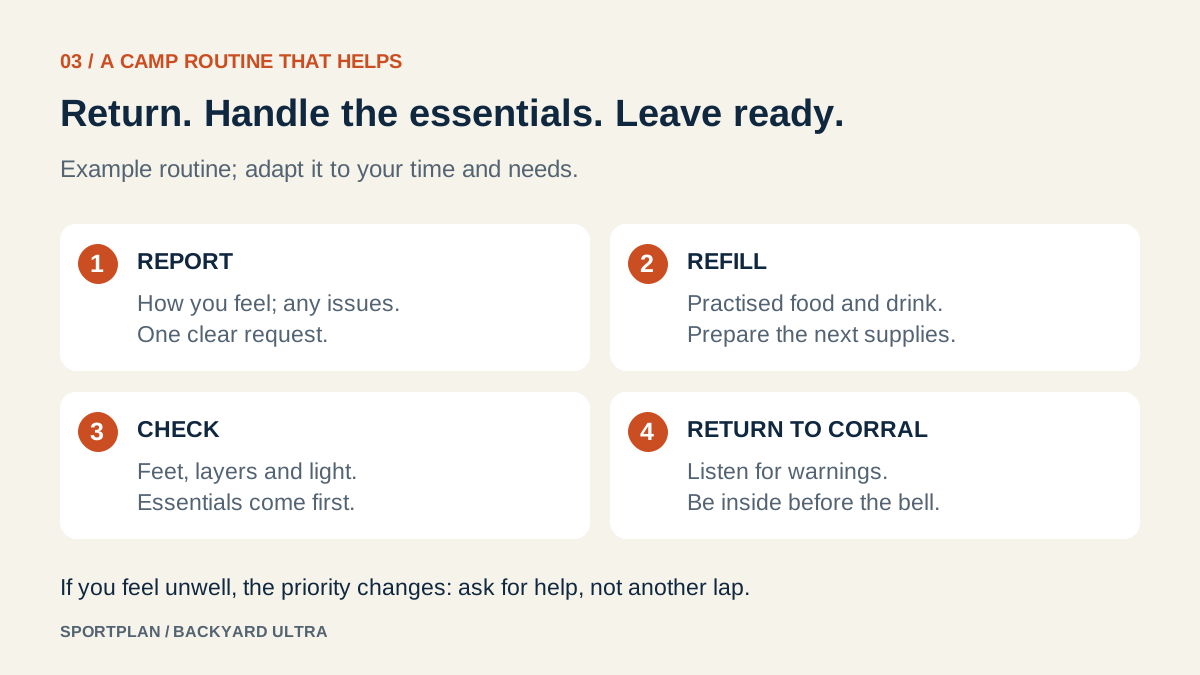
Repeat the essentials in the same order. If you feel unwell, asking for help comes before the next start.
Night preparation is practical rather than dramatic. Charge two light sources, test them outside, keep spare batteries or a charged replacement where you can find them, and lay out warm layers before sunset.
Waterproof bags and a dry pair of socks can matter more than a clever gadget. Confirm what the course marks look like in darkness and whether the event requires particular lights or reflective equipment.
Wear footwear and socks you have used for long sessions. Trim nails with time for a mistake to settle. Practise lacing changes, and know which seams, damp spots or swelling patterns predict trouble for you.
Lubricant, tape and blister dressings are tools, not guarantees; test them before race day.
At each return, ask three concrete questions: Is there a new hotspot? Is a blister changing how I land? Can I fix it in the camp time I have? Address a small hot spot while it is small.
If pain is focal, worsening, or changing your gait, stopping is a performance decision as well as a health decision. A backyard has another bell; it does not have another pair of feet.
The 2019 ISSN ultramarathon nutrition position stand gives 30–50 g of carbohydrate per hour as guidance for single-stage ultras, alongside individual tolerance and varied foods. It is not a backyard-specific prescription.
Build and rehearse a plan suited to your effort, duration and needs; a sports dietitian can help when the event or your medical history makes that complex.
Suppose a runner has practised 40 g per hour. The following is arithmetic for that fictional plan, not a menu everyone should copy:
| Tested product, with its label checked | Carbohydrate |
|---|---|
| Drink portion | 20 g |
| Familiar food taken on the loop | 10 g |
| Familiar food in camp | 10 g |
| Total across the hour | 40 g |
Count the drink as well as the food. Test the actual portions and timing, and keep track of what you consumed rather than what you intended to consume.
Bring more than one texture and a savoury option if you tolerate them, but change one thing at a time in rehearsal. If nausea, repeated vomiting, diarrhoea, or inability to drink develops, stop experimenting and tell race medical staff. Seek professional advice for a medical or nutritional condition; a race article cannot diagnose stomach symptoms.
Hydration also needs a context. Heat, wind, clothing, shade, effort and your own sweat loss all change the problem. Do not force a fixed volume because another runner carries it.
Check the organiser’s water plan, practise carrying the container you will use, and adapt to conditions. The CDC advises athletes to pace activity in heat and to stop and move to a cool place if they feel faint or weak. (CDC Heat and Athletes)
Read the forecast, but also prepare for a forecast that is wrong. Bring sun protection, breathable layers, a dry layer, and a way to keep food usable. On a hot course, your early pace may need to be slower than your cool-weather rehearsal.
Watch your crew-mate as well as yourself. Confusion, collapse, severe weakness or an inability to cool down is a medical problem, not a test of grit.
Night running is tiring because the clock says it should be bedtime and because visibility changes. It is not a requirement to prove you can stay awake without sleep. Adults generally need at least seven hours of sleep, and a race is a poor place to invent deliberate sleep deprivation. (CDC About Sleep)
Do not prescribe yourself a caffeine dose from a stranger’s report. If you normally use caffeine, discuss your plan with a qualified professional when relevant, follow the event rules, and rehearse the product and timing.
Never use a stimulant plan to conceal confusion, chest symptoms, severe overheating or a dangerous loss of coordination. A crew check and a safe stop are better race skills than a theatrical battle with sleep.
Write your red signals before the race: faintness or confusion; chest pain; collapse; inability to keep fluids down; severe or worsening pain; a gait you cannot control; or any concern raised by medical staff. The exact medical response belongs to trained event personnel. Tell them early and clearly what changed.
Arrive early enough to see the corral, inspect the first turn, place your kit and ask the organiser about aid, toilets, lights and weather contingencies.
Eat the breakfast you have practised. Avoid turning the start into a nutrition experiment.
The first three yards should feel almost too easy. Let people leave ahead. Use the route to confirm surface, turns and wind. Walk the rises you planned to walk. Return with time to spare and make the same camp sequence each time.
Your job is to collect evidence: Is the pace truly easy? Is the food still appealing? Are your feet dry? Is the temperature moving in one direction?
As the hours lengthen, protect the next start. A spare five minutes is not wasted time; it is the margin that lets you solve a problem without sprinting to the bell. Do not bank time by running recklessly early. Once you are late to the corral, the format gives you no grace.
When the race becomes a night event, narrow your attention. One yard, one return, one check. A goal such as “I will stay until dawn” can be useful, but keep it subordinate to your red signals and the course rules.
If you stop, tell the official, collect your belongings methodically, and let your crew enact the transport plan rather than making an exhausted solo drive.
Pack a recovery layer, dry socks, simple food and a drink you know you tolerate. Once you are out, get warm or cool according to conditions, sit down, and let somebody else assess the route home.
If you are drowsy, confused, faint, in significant pain or still unwell, do not drive. Arrange a sober driver, a room, or medical support before you leave the venue.
Keep the next day flexible and return to activity according to your recovery. If symptoms worry you, seek medical advice rather than treating them as a required part of finishing.
Dark, tea-coloured urine or unusually severe muscle pain or weakness needs prompt medical attention. These can be signs of rhabdomyolysis; symptoms alone cannot diagnose it. See the CDC’s warning signs.
How far is one backyard yard?
The standard distance is 4 miles 880 feet, or 6.7056 km. Twelve yards would be 80.4672 km if every loop were completed, but the format does not promise twelve starts or a fixed finish.
Can I walk?
Yes, if your walking and running combination completes the loop in less than 60 minutes and you follow the course rules. Practise that combination. A pace that looks slow on a watch may be exactly right if it leaves a workable camp margin.
What happens if I miss the bell?
Under the standard rules, all competitors must start at the bell and there are no late starts. You are out. Ask the organiser whether its local event has any additional procedure, but do not plan around a grace period.
Do I need a crew?
Not necessarily, but you need a logistics plan. A self-supported runner should be able to refill, eat, change layers, inspect feet and manage lights without help. If you have crew, agree on jobs and boundaries instead of assuming they can provide personal aid on the loop.
Can I sleep between yards?
You can use your camp time to sit, close your eyes briefly or reset, but you still have to be present in the corral at each bell. Do not build a strategy around deliberate sleep deprivation or stimulants. If sleepiness makes you unsafe, stop and seek help.
Is a backyard a good first ultra?
It can be a useful first ultra for a regular runner who is ready to practise long-duration decisions and accepts that stopping early may be the correct outcome. It is a poor fit if you are currently injured, under-recovered, medically uncertain, or hoping the format will force you to ignore warning signs.
What does a DNF mean here?
The official rules record how many loops each runner completed; all runners other than the winner are technically DNF. That label does not tell the whole story. A planned stop after a successful rehearsal, a medical stop and a missed bell are different experiences worth recording honestly.
A result marked DNF can still describe the longest run of someone’s life. Under the standard rules, only the winner finishes; everyone’s completed yards should still appear in the results. Read the yard count before judging the label.
| What you want to know | What to check |
|---|---|
| Your distance | Multiply completed yards by 6.7056 km; 24 yards equal 100 miles. |
| A world or national record | Check the category, race date and official result, then distinguish an all-time list from a single-year ranking. |
| A place in a championship | Read the qualification rules for that championship cycle; entering an ordinary Backyard does not itself guarantee a place. |
The official world rankings offer year and all-time views and include performances of 24 yards or more. Absence from that table does not mean a shorter result is invalid. For your own race, start with the organiser’s complete result sheet.
Big’s publishes separate information for the World Team Championship and individual championship qualification. Check the applicable cycle, country selection and qualifying period before building a season around a ticket. For a first attempt, a repeatable hour and an honest decision to continue are more useful targets than somebody else’s record.
Before leaving for the event, write down:
- your process goal, floor and stretch goal;
- the moving-time plan you will start with and the camp sequence it supports;
- food and drink tested in training, with a backup texture;
- foot and weather supplies, including lights and charging;
- your crew’s jobs, your self-service version, and the event’s aid restrictions;
- your red signals and who will make the stop call;
- the sober transport or accommodation plan for after the race.
Then practise the boring version. Arrive, leave, return, reset, and make the next decision. A backyard ultra is open-ended, but your preparation does not have to be vague.
- Find your event: compare dates and locations in the Backyard Ultra calendar, then check the organiser’s current rules.
- Compare another format: explore the ultrarunning calendar if you would prefer an event with a defined distance and finish. Verify the format of each listing.
- Rehearse your hour: use the pace calculator to compare lap times before testing them on suitable terrain.
-
Big’s Backyard Ultra rules — official distance, corral and start timing, loop completion, assistance and artificial-aid rules, standard open-ended winner condition, and the need to check event-specific variants.
-
International Society of Sports Nutrition position stand: nutritional considerations for single-stage ultra-marathon training and racing — evidence limits and practical nutrition challenges in long single-stage ultras, including gastrointestinal tolerance and changing appetite.
-
CDC: Heat and Athletes — pacing and cooling precautions in hot conditions and the instruction to stop and cool down when faint or weak.
-
CDC: About Sleep — adult sleep recommendation and the health importance of adequate, good-quality sleep.
-
CDC: Signs and symptoms of rhabdomyolysis — warning signs and the need for prompt assessment.
Keep planning
Use SportPlan to compare dates, save target events, and build a season that fits your weekends instead of another unstructured list.